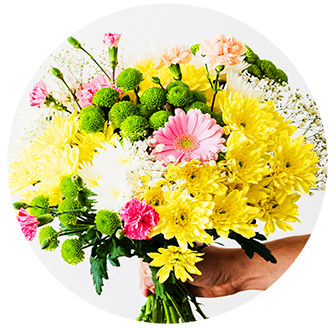
Wedding flowers for Horniman Museum ceremonies
Posted on 25/09/2026
Planning Wedding flowers for Horniman Museum ceremonies is one of those details that looks simple from the outside and then suddenly feels very specific once you start lining everything up. The venue has its own character, your outfits have a tone, the photos will live on for years, and the flowers need to sit comfortably in all of that without shouting over it. That balance matters. A lot.
If you are getting married at the Horniman Museum, you are probably looking for flowers that feel polished, thoughtful, and venue-appropriate rather than just pretty in isolation. This guide walks through what to consider, how to choose the right arrangements, what tends to work best in a museum ceremony setting, and the common mistakes that can trip people up. We will keep it practical, local-minded, and honest. No fluff. Just the useful stuff.
One small truth from experience: couples often think they need to decide on the bouquet first. Sometimes that is true, but often the venue and ceremony setting should guide the whole floral plan. A bright summer bouquet that looks brilliant in a shop window may feel too loose for a formal indoor setting, while a more structured palette can suddenly make everything look calm and elegant. Funny how that works.
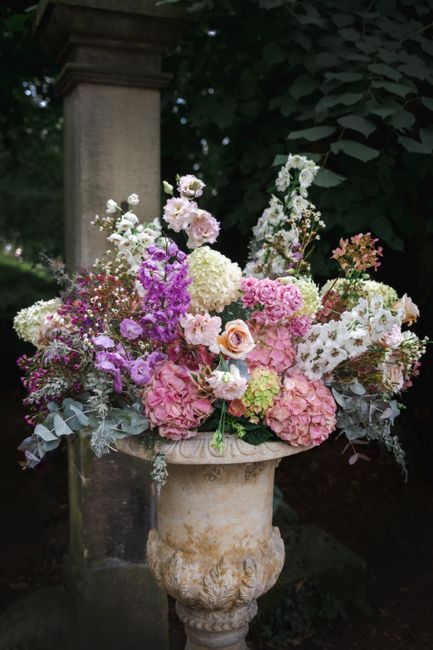
Why Wedding flowers for Horniman Museum ceremonies Matters
Flowers do more than decorate a ceremony. They shape the mood of the room, influence the photos, and quietly tie together all the moving parts: dress, suit, stationery, aisle styling, table settings, and even the way the space feels when guests arrive. At a distinctive venue like the Horniman Museum, that matters even more because the setting already brings a strong visual identity of its own.
The Horniman has a recognisable style, so flowers that are too oversized or too busy can feel slightly out of sync. On the other hand, florals that are carefully chosen can soften architectural lines, add warmth, and make the ceremony feel personal without taking over the room. That is the sweet spot most couples are after, whether they realise it yet or not.
There is also a practical reason this topic matters: the floral decisions you make early on affect budget, delivery timing, set-up, and how much stress you carry on the day. If the plan is clear, everything feels lighter. If it is vague, someone ends up answering questions at 8:15 a.m. while holding a coffee and trying to find the right vase. Nobody wants that scene.
Expert summary: For Horniman Museum ceremonies, the best wedding flowers are usually the ones that respect the venue, suit the light in the room, photograph well from multiple angles, and can be delivered and installed with minimal fuss.
You will also notice that the right florals can make small spaces feel intentional. Even a modest bouquet or a neat pair of ceremony arrangements can lift the whole atmosphere. It is not always about size. Sometimes it is just about the right shape, the right colour, and the right amount of restraint.
How Wedding flowers for Horniman Museum ceremonies Works
In practical terms, floral planning for a museum wedding usually starts with three questions: what space are you using, how formal do you want it to feel, and what time of year are you getting married? Those answers steer everything else. If the ceremony is intimate, you may only need a bridal bouquet, buttonholes, and a few focal arrangements. If the event is more styled, you might add aisle flowers, pedestal pieces, registry table flowers, and reception table centrepieces.
At the Horniman Museum, the layout and room use will affect what you order. Some couples want a classic ceremony look with white and green flowers, while others prefer soft colour, garden-style texture, or a more contemporary arrangement with strong lines. The key is not just choosing flowers you love. It is choosing flowers that belong in the space.
Here is the usual flow:
- Define the ceremony setting. Decide which areas need flowers: entrance, aisle, ceremony table, signing table, and post-ceremony photos.
- Choose a palette. Think about dresses, suits, the season, and the venue interior.
- Pick core pieces. Bridal bouquet, bridesmaid bouquets, groom buttonholes, and any table arrangements.
- Check timing and delivery. Fresh flowers need a practical delivery window and someone to receive them.
- Plan installation. Some pieces can be placed quickly; others need a bit more set-up time and coordination.
For couples who want to keep things simple, a focused collection can work well. A coordinated range such as wedding flowers or a tailored bouquet selection like bridal bouquets can give you a polished look without having to build everything from scratch.
If you are coordinating multiple people, it helps to think in layers. The bride's bouquet should be the anchor. Bridesmaid bouquets should echo it, not compete with it. Buttonholes should be neat and durable. Table flowers should support the setting rather than distract from it. Simple idea, but it makes a huge difference in the room.
Key Benefits and Practical Advantages
The main benefit of well-planned wedding flowers is that they make the ceremony feel finished. Not overdone. Finished. There is a difference, and guests notice it even if they cannot put their finger on why.
- Better photos: Flowers soften backgrounds, frame faces, and add depth to ceremony shots.
- Stronger venue fit: The right colours and shapes make the Horniman feel even more welcoming.
- Less last-minute stress: When your floral plan is clear, set-up becomes much easier.
- Better coordination: Bouquets, buttonholes, and table designs can all follow one visual story.
- Seasonal value: Choosing flowers in season often gives a fuller look and better availability.
- Guest experience: Flowers help the space feel cared for, which sets the tone from the moment people arrive.
Another advantage, and this is easy to overlook, is flexibility. If you choose a strong colour base, a florist can often adapt the design slightly if a bloom is unavailable or if the weather shifts the palette a little. That kind of breathing room matters, especially with fresh flowers.
For example, a white-and-green scheme can work beautifully across many months, while soft pinks or richer autumn tones can help tie the flowers into the season. If you want a slightly more luxurious feel, pieces from the luxury flowers range can lend structure and finish without needing a huge quantity of stems.
Who This Is For and When It Makes Sense
This topic is for anyone planning a ceremony at the Horniman Museum who wants the flowers to feel intentional, not improvised. That could be a couple planning an intimate weekday ceremony, a larger wedding with a proper floral line-up, or a pair who mainly want a beautiful bouquet and a few well-placed finishing touches. Different scale, same principle.
It also makes sense for people who care about presentation but do not want to micromanage every stem. Some couples love detailed floral planning. Others just want to know, in plain English, what works. If that sounds familiar, you are in the right place.
These flowers are especially useful when:
- you want your ceremony to feel cohesive from arrival to exit
- the venue already has a strong style and needs florals that complement it
- you are working with a defined budget and want to spend it wisely
- you need bouquets and buttonholes that travel well and hold up through the day
- you want a floral look that photographs well from both close-up and wide shots
There is also a practical audience here: family members helping with planning, wedding coordinators, and even couples organising a shorter notice ceremony. In those cases, a streamlined choice like wedding table arrangements or a ready-made collection can remove a lot of decision fatigue. And to be fair, decision fatigue is real. By the time you have compared chairs, menus, and travel plans, choosing peonies can feel weirdly serious.
Step-by-Step Guidance
If you want a calm floral process, follow a simple sequence. It does not need to be complicated. Honestly, the simplest plans are often the strongest.
1. Start with the ceremony format
Ask what actually needs flowers. Is it only the bouquet and buttonholes? Do you need a sign-in table arrangement? Will there be a ceremony table or aisle pieces? If you do not know, list the spaces guests will see first and the spots that will appear in photos. That gives you the real priorities.
2. Choose your visual direction
Pick a style: classic, romantic, modern, natural, or softly seasonal. Then narrow the palette. White, ivory, blush, lilac, green, and muted pastels are popular because they are calm and easy to work with. If you prefer something richer, deep red or mixed colour can be striking, though you will want to keep the rest of the styling more restrained.
3. Match the flowers to the venue
The Horniman Museum rewards balance. Compact, elegant bouquets often work better than huge, sprawling ones unless the rest of the room is equally dramatic. Table pieces should be low enough for conversation or positioned where they will not interrupt sightlines. A little consideration here saves a lot of awkwardness later.
4. Build the bouquet hierarchy
Think in order: bridal bouquet, bridesmaid bouquets, buttonholes, then table or ceremony flowers. This keeps the design coherent. For example, a bouquet with roses and lisianthus can be mirrored in buttonholes through a single bloom or two, while table arrangements can echo the same colours without copying the bouquet exactly.
5. Confirm delivery and set-up details
Make sure someone knows when flowers are arriving, where they can be left, and who is placing them. If the venue has rules about access times or loading areas, build that into the plan early. A florist who has worked with event timings before will usually ask these questions, but it is still worth checking.
6. Review the final list a week before
Run through everything again: names, quantities, flower types, colours, and any special notes. This is also the moment to confirm who gets which bouquet and where each arrangement goes. Small detail, big payoff.
A useful shortcut is to start from a curated wedding range and then refine it to suit the venue. Collections like The Perfect Match wedding collection or Royal Essence wedding collection can be a helpful base if you want a joined-up look without assembling every item separately.
Expert Tips for Better Results
Here is where the small gains happen. These are the choices that make floral design feel quietly expensive, even when the budget is sensible.
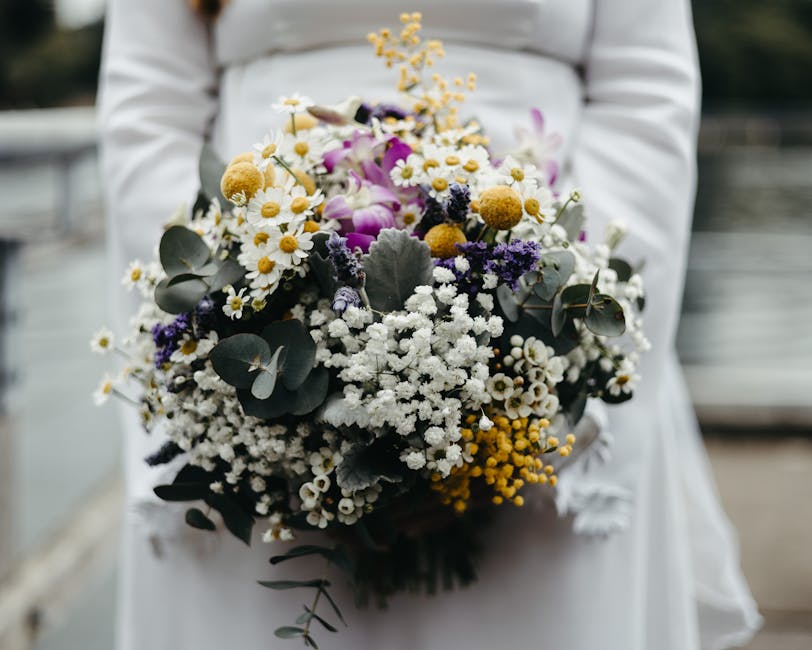
- Keep the bouquet shape in proportion to the dress. A structured gown usually suits a more refined bouquet shape, while softer dresses can carry a looser design.
- Use one or two hero flowers. Too many competing blooms can make arrangements feel busy. A clear lead flower gives the design focus.
- Think about the room light. Pale flowers can glow beautifully in natural light, but very light petals may disappear in certain photographs if the contrast is weak.
- Carry the colour through the day. Tie bouquet tones into table flowers, ribbons, or bridesmaid blooms for a more complete look.
- Choose practical stems for buttonholes. They need to look neat and last through the ceremony, photos, hugs, and probably a little weather.
- Allow for movement and handling. Flowers are touched, carried, and adjusted. A design that looks beautiful but falls apart at the first warm breeze is not the one.
Seasonality helps too. In spring, softer shades and lighter textures feel natural. In summer, fuller blooms can hold their own in brighter light. In autumn, richer tones and more layered shapes work beautifully. Winter often benefits from cleaner lines and more defined structure. Not a hard rule, just a very useful one.
If you are unsure, ask for a florist's choice approach within your chosen palette. A well-made florist-led design can look more elegant than a rigid checklist of every stem. A little trust goes a long way here.
Common Mistakes to Avoid
Let's be honest: most floral mistakes are not dramatic. They are usually small mismatches that add up. Here are the ones worth watching for.
Over-ordering without a clear plan
It is easy to think more flowers automatically means a better result. Not always. If the venue is relatively contained, huge arrangements can crowd the space and distract from the ceremony.
Choosing flowers that do not suit the season
Some flowers are available year-round, but that does not mean they are the most practical option for your date. Seasonally appropriate choices often give you better quality and less stress.
Ignoring the buttonholes
Buttonholes may be small, but they help finish the look. A beautiful bouquet paired with a random buttonhole choice can throw the whole visual balance off.
Forgetting venue logistics
Access, timing, parking, and placement matter. A bouquet can be perfect and still arrive too late if nobody has checked the route in advance.
Making everything equally important
You need a focal point. Usually that is the bridal bouquet. If every item shouts, nothing feels special. A good floral plan has hierarchy, not noise.
Not thinking about photographs
What looks lovely in the room may flatten in pictures if the colours are too close to the backdrop. This is one of those things people only notice later, which is a shame, because it is easy to fix upfront.
Sometimes the issue is simply trying to do too much at once. A bouquet, two bridesmaid bouquets, a handful of buttonholes, and one strong table arrangement can be more effective than a dozen disconnected pieces. Less can be more. Annoying, but true.
Tools, Resources and Recommendations
You do not need a long list of tools to plan wedding flowers well, but a few practical resources make the process much smoother. Start with a simple note of your ceremony date, venue access times, guest count, and colour ideas. Even a phone note will do. Fancy spreadsheets are optional. Helpful, yes. Mandatory, no.
It also helps to gather a few reference images that show the kind of floral feel you like. Not for copying, exactly, but for identifying patterns: soft shape, compact bouquet, bold colour, natural greenery, low centrepieces, and so on. Once you know what keeps appearing in your favourites, decisions become easier.
For product-led planning, these pages can support the process naturally:
- bridesmaid bouquets for matching bridal party flowers
- buttonholes for the groom and wedding party
- white wedding styling for a clean, timeless look
- soft romantic wedding flowers if you want a lighter palette
- flower care advice to help arrangements last well on the day
If your ceremony is tightly timed, delivery planning matters just as much as design. In that case, it is sensible to review the shop's delivery information and think through the handover point before the day arrives. A lot of stress disappears once the logistics are nailed down.
For couples comparing styles, the following bouquet and arrangement directions are often useful:
- rose-led designs for a classic look
- mixed seasonal flowers for a softer, more natural feel
- white and green arrangements for clarity and calm
- purple, blush, or mixed-colour schemes for more personality
- low table pieces for easy conversation during the reception
Law, Compliance, Standards, or Best Practice
For wedding flowers, the main compliance issues are usually practical rather than legal. You are not dealing with complicated regulation in the way you might with food service or construction, but you still want sensible standards. The key is good planning, responsible handling, and respect for venue rules.
Best practice usually includes the following:
- Venue approval: Check what the Horniman Museum allows in ceremony spaces, especially for candles, adhesives, confetti, and flower installation methods.
- Safe placement: Keep aisles clear and ensure arrangements do not block access routes or emergency exits.
- Freshness and transport: Flowers should be conditioned and transported carefully so they arrive looking their best.
- Allergy awareness: If guests or family members are sensitive to strong scents, avoid heavily fragrant blooms in enclosed spaces.
- Waste and removal: Plan who clears arrangements after the ceremony if they are not staying on site.
In the UK, wedding suppliers are also expected to operate honestly and clearly about what is included, what can be substituted, and how delivery or refunds work. That is just good practice, really. You should know what you are getting, when it will arrive, and what happens if a stem variety is unavailable on the day.
It is sensible to ask about substitutions in advance. Seasonal flowers can vary, and a florist may need to swap a bloom for an equivalent. If the overall palette and shape stay true to your plan, that is usually perfectly normal. A careful florist will keep the spirit of the design intact.
Options, Methods, or Comparison Table
If you are deciding how elaborate to go, this simple comparison can help. There is no single right answer, but there is usually a better fit for your venue, budget, and style.
| Approach | Best for | Pros | Things to watch |
|---|---|---|---|
| Minimal ceremony flowers | Intimate weddings, smaller budgets, simple styling | Easy to manage, elegant, low stress | Can feel too plain if the venue styling is very sparse |
| Focused bouquet-led styling | Couples who want impact without over-decorating | Strong photos, manageable setup, clear visual hierarchy | Needs a coherent palette to feel complete |
| Full ceremony and reception florals | Larger weddings and design-led events | Highly polished, immersive, cohesive throughout the day | More coordination, higher cost, more installation time |
| Collection-based floral planning | Busy couples who want pre-built coordination | Faster decisions, consistent style, easier budgeting | Less room for custom changes unless requested early |
For many Horniman ceremonies, the bouquet-led or collection-based route is the sweet spot. You get enough visual impact for the venue and the photographs, without turning the day into a production. Unless that is your thing, of course. Some people do enjoy a grand floral moment. Fair enough.
Case Study or Real-World Example
Picture a late spring ceremony with a small guest list and an emphasis on natural light. The couple wants the flowers to feel elegant, but not stuffy. They choose a white-and-soft-blush palette with gentle greenery, a medium bridal bouquet, two matching bridesmaid bouquets, simple buttonholes, and one low arrangement for the signing table.
That plan works because it respects the room. The bouquets are visible in photos without overwhelming the frame. The table arrangement adds polish without blocking anyone's view. And because the palette is restrained, the flowers sit comfortably alongside the venue's own character rather than fighting it.
Now compare that with a more dramatic option: rich mixed colours, larger stems, and a fuller reception display. That can be lovely too, but it suits a couple who want a more expressive look and are prepared to coordinate the timing and delivery more carefully. Different aim, different answer.
The real lesson is simple. Successful wedding flowers are not just beautiful in the abstract. They are beautiful in context. That is the bit people sometimes miss when they are browsing images late at night and everything starts to look equally gorgeous. Been there, seen it, very relatable.
Practical Checklist
Use this before confirming your order.
- Have you confirmed the ceremony space and what flowers are actually needed?
- Do you have a clear palette that suits the Horniman Museum setting?
- Have you chosen the bridal bouquet style and size?
- Have you planned bridesmaid bouquets, buttonholes, and any table arrangements?
- Do you know the delivery time and who will receive the flowers?
- Have you checked venue access, parking, and set-up rules?
- Are you aware of any fragrance or allergy concerns?
- Have you asked about substitutions if a stem is unavailable?
- Will the flowers still look good in photos from both close and wide angles?
- Do you know what happens to the flowers after the ceremony?
Quick practical takeaway: If you can answer those ten points confidently, your floral planning is in very good shape.
Conclusion
Wedding flowers for Horniman Museum ceremonies work best when they feel thoughtful, balanced, and quietly confident. The venue deserves flowers that complement it, not compete with it. That usually means choosing a clear palette, planning for the actual ceremony layout, and keeping the arrangements aligned with the mood you want guests to feel the moment they walk in.
Whether you are leaning toward a simple bouquet-led setup or a more complete floral scheme, the smartest move is to treat the flowers as part of the whole experience. Not a separate add-on. They shape the photos, the atmosphere, and the memory of the day. And truth be told, that memory is often in the little details: a ribbon catching the light, a boutonniere that sits neatly in place, the scent of fresh stems as people gather before the ceremony begins.
If you want a refined, easy-to-manage floral plan, start with a style that suits the venue and build from there. That is usually where the best results come from. Calm choices. Clear structure. Flowers that feel like they belong.
Get a free quote today and see how much you can save.
Frequently Asked Questions
What flowers work best for a Horniman Museum wedding ceremony?
Soft romantic flowers, white and green arrangements, rose-led bouquets, and structured mixed seasonal designs usually work well. The best choice depends on the room, the season, and how formal you want the ceremony to feel.
How many floral arrangements do I need for a Horniman Museum ceremony?
That depends on the size of the ceremony and the areas you want to style. Many couples start with the bridal bouquet, bridesmaid bouquets, buttonholes, and one or two ceremony or table arrangements, then expand from there if needed.
Should I choose seasonal flowers for my wedding?
In most cases, yes. Seasonal flowers are often easier to source, fresher on the day, and better value. They also tend to suit the time of year naturally, which helps the whole design feel more cohesive.
Can I keep my wedding flowers simple and still make the venue look beautiful?
Absolutely. A simple bouquet, neat buttonholes, and one well-placed arrangement can create a polished look without overdoing it. Good styling is more about balance than quantity.
What colour palette suits Horniman Museum ceremonies?
White, blush, soft pink, green, lilac, and mixed natural tones are all popular because they are elegant and easy to photograph. Stronger colours can work too, but they usually need to be handled more carefully.
How far in advance should I plan wedding flowers?
It is sensible to begin planning as soon as your ceremony date and venue details are confirmed. That gives you time to choose the style, check availability, and sort delivery without rushing the decision.
Do buttonholes matter if I already have a bouquet?
Yes, they do. Buttonholes help the groom and key wedding party members feel coordinated with the bridal flowers. They are small, but they complete the visual story nicely.
What if a flower is unavailable near my wedding date?
That happens from time to time, especially with seasonal blooms. A good florist will suggest a suitable substitute that keeps the colour, shape, and feel of the design intact.
Are all wedding flowers suitable for indoor ceremony spaces?
Not always. Some heavily scented flowers may not be ideal for enclosed spaces, and some large designs can feel too dominant. It is worth choosing flowers that fit the room as well as the style.
Can I use a ready-made wedding collection instead of custom flowers?
Yes, and for many couples that is a smart choice. A collection can save time and keep the styling consistent, especially if you want a polished look without managing every detail separately.
How do I make sure the flowers look good in photos?
Choose a palette that contrasts gently with the venue, keep the bouquet shape balanced, and avoid making every arrangement equally bold. A little hierarchy helps the photos feel clearer and more elegant.
What is the best way to keep wedding flowers fresh on the day?
Good transport, correct conditioning, and sensible timing matter most. Once the flowers are delivered, they should be kept in the right conditions until they are needed, and handled as little as possible before the ceremony.